

Original Text (Rephrased)
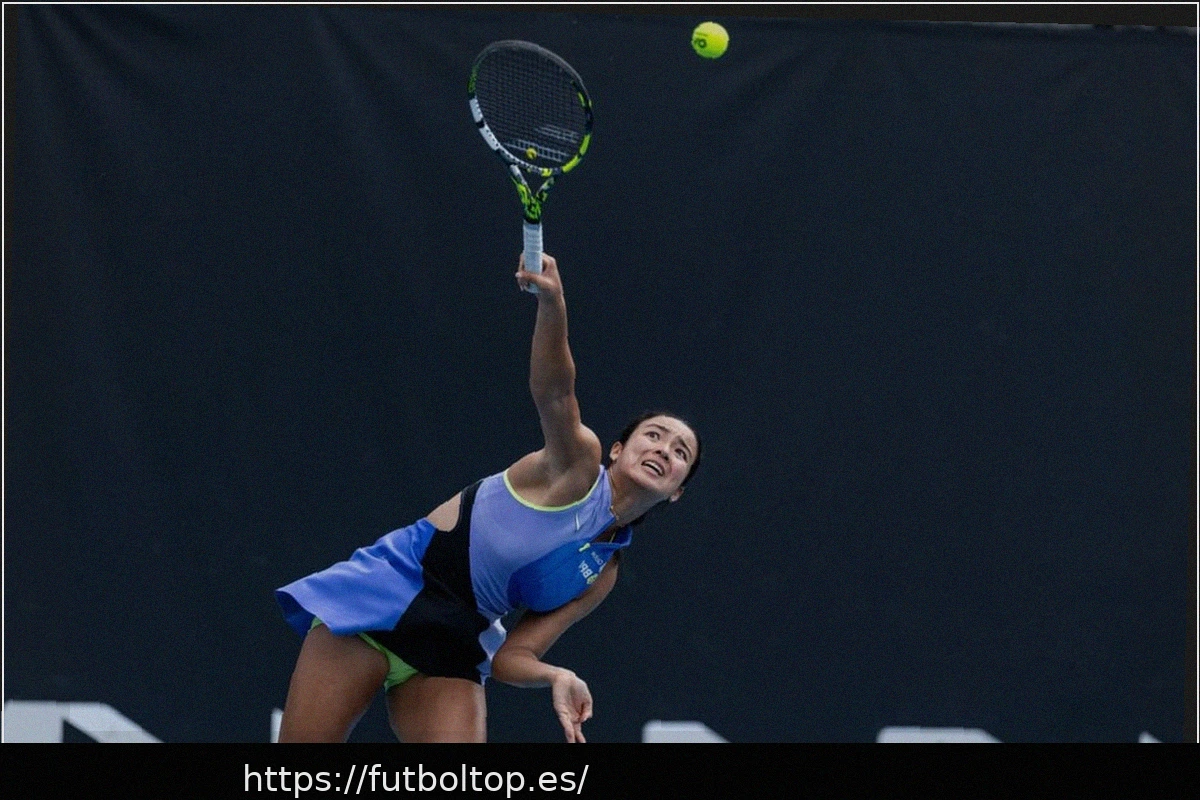
A year ago, Alexandra Eala made her entrance in Miami, largely unnoticed. She was a wild card, ranked outside the top 100, a stranger to most spectators filling Hard Rock Stadium. Nineteen years old, she had yet to claim a single main draw victory at a WTA 1000 tournament. Yet, over the subsequent ten days, she would conquer four formidable opponents in successive rounds, compelling the tennis world to recognize her name.
She defeated Jelena Ostapenko, a former French Open victor, followed by Madison Keys, and then the world number two, Iga Swiatek. Three Grand Slam champions, consecutively, on the grandest stage of her nascent career, in the very city where she would declare her presence to the world. Her remarkable run concluded in the semifinals against Jessica Pegula, after an arduous two-and-a-half-hour battle of physical tennis. By the time she left the court, the sport had gained an undeniable new talent and a career path that defied easy explanation. This week, she returns as the 32nd seed.
The world of tennis often sees players achieve one spectacular week, only to spend their remaining careers striving to replicate it. Eala, however, bypassed this common narrative. Her transformation from a wild card to a seeded player, though seemingly minor on a draw sheet, encapsulates a full year of unwavering, systematic effort, revealing everything essential about her character.
From Manila to Mallorca to the Top 30
Eala’s journey to the professional circuit embodies the rare, almost fairytale-like narrative that tennis occasionally creates but seldom maintains. Hailing from Quezon City, Philippines, she picked up a racket at four and, by 13, relocated to Spain to hone her skills at the rigorous Rafa Nadal Academy in Mallorca. Her dedication culminated in a 2023 graduation, with Nadal himself presenting her diploma. Her junior career highlight was clinching the 2022 US Open girls’ singles title.
The subsequent challenge involved the arduous task of translating junior success into professional standing – a transition that proves insurmountable for most promising talents. The women’s tour is relentless, deeply competitive, and shows little regard for junior accolades. Many players who excelled at 16 often disappear by 21, unable to bridge the gap between defeating peers and seasoned professionals. Eala navigated this chasm with a maturity beyond her years, grounding her game in a solid baseline strategy and remarkable mental fortitude, qualities acknowledged by both coaches and rivals.
The Miami 2025 campaign was the crucible that forged all her quiet, unseen labor into one unforgettable week. Yet, what truly distinguishes Eala from other fleeting «feel-good» wildcard stories is her unwavering persistence afterwards. She didn’t vanish. She continued her winning ways. She kept ascending.
As the 2026 season unfolded, she reached the semifinals at the Auckland Open, defeated top-10 player Jasmine Paolini in Dubai, and advanced to the last 16 at Indian Wells before her loss to Linda Noskova. She even secured a retirement victory against Coco Gauff, who withdrew while trailing 6-2, 2-0, describing her arm as feeling «like it was on fire.» Her career trajectory isn’t merely a tale of one magical week followed by a gentle return to normalcy. It’s the saga of an athlete who reached the pinnacle, surveyed her surroundings, and simply resolved to remain there.
390 Points on the Clock
This return brings with it tangible, measurable pressure, and it would be disingenuous to ignore it. Eala arrives in Florida with the crucial task of defending 390 ranking points, the entirety of her semifinal achievement from last year, which accounts for approximately a quarter of her current total. An early exit in the first round would cause her ranking to plummet, potentially pushing her outside the top 50 and back into a precarious position where qualifying for Grand Slams once again becomes a challenging, anxious endeavor – a return to the precarious fringe she just escaped.
This is the inevitable cost of rapid success. The ranking system operates with relentless mathematical precision, oblivious to personal narratives. The points she accumulated last March will vanish the moment this year’s tournament commences. She cannot save them. She cannot reference last year’s draw sheet and demand credit. Her only options are to replace them or witness their disappearance.
However, observing Eala’s perspective on this situation reveals that any nerves, if present, are deeply submerged beneath a profound resilience. “Miami last year was a beautiful time for me, and it was the start of all of this,” she recently stated. “But since then, I’ve achieved a lot as well. I’ve grown a lot, and I’ve had so many good matches, so many tough losses, so much experience. And that’s helped me build confidence, self-esteem, and I know that I belong here.” That final declaration warrants contemplation: «I know that I belong here.» There’s a distinct difference between a player who merely hopes to belong at a particular level and one who possesses an absolute certainty. This distinction typically manifests most vividly when matches are tense, crowds are vociferous, and crucial ranking points hinge on a tiebreak. Hope might falter. Knowledge endures.
A Seed, Not a Cinderella
What truly sets Eala’s narrative apart, distinguishing it from countless «wild card fairy tales» that tennis has celebrated and subsequently forgotten, is her unequivocal refusal to be solely defined by Miami 2025. The Cinderella story is a favorite in tennis, appealing in its simplicity and tidiness, requiring nothing more than a week’s fleeting attention from its audience. A young, unknown player triumphs over a few renowned names, social media erupts, and then everyone moves on. Eala, without ever explicitly stating it, dismissed this narrative. She rejected it by consistently appearing at subsequent tournaments and continuing her winning streak.
This week, tournament director James Blake affirmed that Eala will receive main stadium billing in Miami, an acknowledgment not only of her seeding but also of her drawing power. She has emerged as one of Southeast Asia’s most closely followed tennis players, and the Filipino fanbase that inundated social media during her run last year has only expanded since. Such attention, however, brings its own set of complexities and a certain gravity. Every time she steps onto the court, she carries the expectations of an entire nation, representing a country with little prior history of producing players at this elite level. Each match she plays serves as an inspiration, prompting someone watching professional tennis for the first time to think, «that could be me.»
At 20 years old, ranked 29th globally, Eala’s resume includes training at the Nadal Academy, winning the US Open juniors, and defeating formidable opponents like Swiatek, Gauff, and Paolini within a single twelve-month period. She views 2026 as a developmental year, not her peak. She has openly discussed 2027 as the season when her game will coalesce at an even higher level – a statement that reflects either youthful confidence or the astute self-awareness of someone who understands her career trajectory more accurately than any external observer.
Last year, Miami granted Eala her moment. She arrives this week not to re-experience it, nor to merely chase the memory of that wild card week, but to unequivocally demonstrate that it was just the prologue. The Cinderella story has concluded. The real journey has just begun, and it requires no fairy godmother, no fortunate draw, or wild card. It simply demands what Eala has consistently provided: time, tireless effort, and the unwavering conviction that this is precisely where she was always meant to be.
Texto en Español (Reescrito y Traducido)
Hace un año, Alexandra Eala hizo su entrada en Miami, pasando en gran medida desapercibida. Era una jugadora comodín, clasificada fuera del top 100, una desconocida para la mayoría de los espectadores que llenaban el Hard Rock Stadium. Con diecinueve años, aún no había logrado una sola victoria en el cuadro principal de un torneo WTA 1000. Sin embargo, durante los diez días siguientes, vencería a cuatro oponentes formidables en rondas consecutivas, obligando al mundo del tenis a aprender su nombre.
Derrotó a Jelena Ostapenko, una excampeona de Roland Garros, luego a Madison Keys y, posteriormente, a la número dos del mundo, Iga Swiatek. Tres campeonas de Grand Slam, de forma consecutiva, en el escenario más grande de su incipiente carrera, en la misma ciudad donde se anunciaría al mundo. Su notable trayectoria concluyó en las semifinales contra Jessica Pegula, después de una ardua batalla física de dos horas y media. Para cuando abandonó la cancha, el deporte había ganado un nuevo talento innegable y una trayectoria profesional que desafiaba una explicación sencilla. Esta semana, regresa como la trigésimo segunda cabeza de serie.
El mundo del tenis a menudo ve a jugadores lograr una semana espectacular, solo para pasar el resto de sus carreras intentando replicarla. Eala, sin embargo, evitó esta narrativa común. Su transformación de comodín a jugadora sembrada, aunque parezca menor en un cuadro de sorteo, encapsula un año completo de esfuerzo inquebrantable y sistemático, revelando todo lo esencial sobre su carácter.
De Manila a Mallorca y al Top 30
La trayectoria de Eala hacia el circuito profesional encarna esa narrativa rara, casi de cuento de hadas, que el tenis ocasionalmente crea pero que rara vez mantiene. Originaria de Quezon City, Filipinas, tomó una raqueta a los cuatro años y, a los 13, se trasladó a España para perfeccionar sus habilidades en la exigente Rafa Nadal Academy en Mallorca. Su dedicación culminó con una graduación en 2023, con el propio Nadal entregándole su diploma. El punto culminante de su carrera juvenil fue la obtención del título individual femenino del US Open de 2022.
El desafío subsiguiente implicó la ardua tarea de traducir el éxito juvenil en credibilidad profesional, una transición que resulta insuperable para la mayoría de los talentos prometedores. El circuito femenino es implacable, profundamente competitivo y muestra poca consideración por los logros juveniles. Muchas jugadoras que destacaron a los 16 años a menudo desaparecen a los 21, incapaces de cerrar la brecha entre vencer a sus pares y a profesionales experimentadas. Eala navegó este abismo con una madurez que desmentía su edad, cimentando su juego en una sólida base desde el fondo de la cancha y una notable compostura mental, cualidades reconocidas tanto por entrenadores como por rivales.
La campaña de Miami 2025 fue el crisol que transformó todo su trabajo silencioso e invisible en una semana inolvidable. Sin embargo, lo que realmente distingue a Eala de otras historias fugaces de comodines «inspiradoras» que el deporte ha producido y luego olvidado, es su inquebrantable persistencia después. No se desvaneció. Siguió ganando. Siguió ascendiendo.
Al comenzar la temporada 2026, llegó a las semifinales del Abierto de Auckland, derrotó a la jugadora del top 10 Jasmine Paolini en Dubái y alcanzó los octavos de final en Indian Wells antes de caer ante Linda Noskova. Incluso consiguió una victoria por retirada contra Coco Gauff, quien se retiró perdiendo 6-2, 2-0, describiendo su brazo como si, en sus propias palabras, «estuviera en llamas». Su trayectoria profesional no es simplemente la historia de una semana mágica seguida de un elegante regreso a la tierra. Es la saga de una atleta que llegó al nivel más alto, observó su entorno y simplemente decidió quedarse.
390 Puntos en Juego
Este regreso conlleva una presión tangible y cuantificable, y sería deshonesto ignorarla. Eala llega a Florida con la tarea crucial de defender 390 puntos de ranking, la totalidad de su logro semifinal del año pasado, lo que representa aproximadamente una cuarta parte de su total actual. Una eliminación temprana en primera ronda haría que su ranking cayera en picada, potencialmente sacándola del top 50 y regresándola a una posición precaria donde la clasificación para los Grand Slams se convertiría de nuevo en un ejercicio tenso y ansioso, un regreso al margen del que acaba de salir.
Este es el coste inevitable del éxito rápido. El sistema de ranking opera con una precisión matemática implacable, indiferente a las narrativas personales. Los puntos que acumuló el pasado marzo expirarán en el momento en que comience el torneo de este año. No puede guardarlos. No puede referirse al cuadro del año pasado y pedir crédito. Sus únicas opciones son reemplazarlos o verlos desaparecer.
Sin embargo, al observar la perspectiva de Eala sobre esta situación, se revela que cualquier nerviosismo, si es que existe, está profundamente sumergido bajo una profunda resiliencia. «Miami el año pasado fue un momento hermoso para mí, y fue el comienzo de todo esto», afirmó recientemente. «Pero desde entonces, también he logrado mucho. He crecido mucho y he tenido tantos buenos partidos, tantas derrotas difíciles, tanta experiencia. Y eso me ha ayudado a construir confianza, autoestima, y sé que pertenezco aquí». Esa última declaración merece ser considerada: «Sé que pertenezco aquí». Hay una diferencia clara entre una jugadora que simplemente espera pertenecer a un cierto nivel y una jugadora que lo sabe con certeza, y esa diferencia tiende a revelarse más claramente cuando el partido está apretado, la multitud es ruidosa y los puntos de ranking dependen de un tie-break. La esperanza puede tambalearse. El conocimiento, perdura.
Una Sembrada, No una Cenicienta
Lo que verdaderamente distingue la narrativa de Eala, separándola de los innumerables «cuentos de hadas de comodín» que el tenis ha celebrado y luego olvidado, es su negativa inequívoca a ser definida únicamente por Miami 2025. La historia de Cenicienta es una favorita en el tenis, atractiva por su simplicidad y orden, que no requiere más que una atención fugaz de una semana por parte de su audiencia. Una jugadora joven y desconocida derrota a unos cuantos nombres famosos, las redes sociales estallan, y luego todos pasan a otra cosa. Eala, sin declararlo explícitamente, rechazó esta narrativa. La rechazó simplemente al presentarse constantemente en los torneos subsiguientes y continuar su racha ganadora.
Esta semana, el director del torneo, James Blake, confirmó que Eala recibirá un lugar destacado en el estadio principal de Miami, un reconocimiento no solo de su posición de sembrada, sino también de su poder de convocatoria. Se ha convertido en una de las tenistas más seguidas del sudeste asiático, y la base de fans filipina que inundó las redes sociales durante su participación el año pasado solo ha crecido desde entonces. Sin embargo, tal atención trae consigo sus propias complejidades y una cierta gravedad, si se quiere. Cada vez que pisa una cancha, lleva las expectativas de toda una nación, representando a un país con poca historia previa de producir jugadores a este nivel de élite. Cada partido que juega sirve de inspiración, haciendo que alguien que ve tenis profesional por primera vez piense: «ese podría ser yo».
Con 20 años, clasificada en el puesto 29 a nivel mundial, el currículum de Eala incluye el entrenamiento en la Academia Nadal, la victoria en el US Open juvenil y el haber derrotado a oponentes formidables como Swiatek, Gauff y Paolini en un período de doce meses. Ella considera 2026 como un año de construcción, no su pico. Ha hablado abiertamente de que 2027 será la temporada en la que todo encajará a un nivel aún más alto, lo que es o bien la confianza de la juventud o la astuta autoconciencia de alguien que comprende su trayectoria profesional con mayor precisión que cualquier observador externo.
El año pasado, Miami le concedió a Eala su momento. Llega esta semana no para revivirlo, ni para perseguir el recuerdo de lo que se sintió esa semana de comodín, sino para demostrar inequívocamente que aquello fue solo el prólogo. La historia de Cenicienta ha terminado. La verdadera historia acaba de comenzar, y no necesita un hada madrina, un sorteo afortunado o un comodín para seguir adelante. Solo necesita lo que Eala le ha dado desde el principio: tiempo, trabajo incansable y la firme convicción de que siempre estuvo destinada a estar aquí.