

Versión en Español
Durante gran parte de su historia, el tenis se rigió por una base de confianza elegante y, a veces, brutal. La decisión del juez de silla era final. Las llamadas de línea eran instantáneas e imperfectas. Los jugadores hacían muecas, murmuraban y, ocasionalmente, estallaban, pero el deporte continuaba. Había un fatalismo placentero en ello, que aceptaba el error humano como un precio razonable por la pureza de una competición ininterrumpida.
Luego llegó la tecnología, como siempre lo hace, prometiendo un mundo más justo. Primero Hawk-Eye, eliminando la injusticia de las malas llamadas de línea. Más recientemente, la revisión de video, disponible en todas las canchas de los nueve torneos ATP y WTA Masters 1000 desde febrero del año pasado, prometía hacer por las interrupciones y las faltas lo que el sistema electrónico de línea había hecho por la línea de fondo. Aunque la idea era sólida, su ejecución se está convirtiendo progresivamente en un desastre a cámara lenta.
Lo que sucedió en el Estadio 2 de Indian Wells el viernes es la ilustración más clara hasta ahora de un sistema que se está forzando para cubrir algo que nunca se pretendió proteger: la queja retroactiva.
El Momento Clave
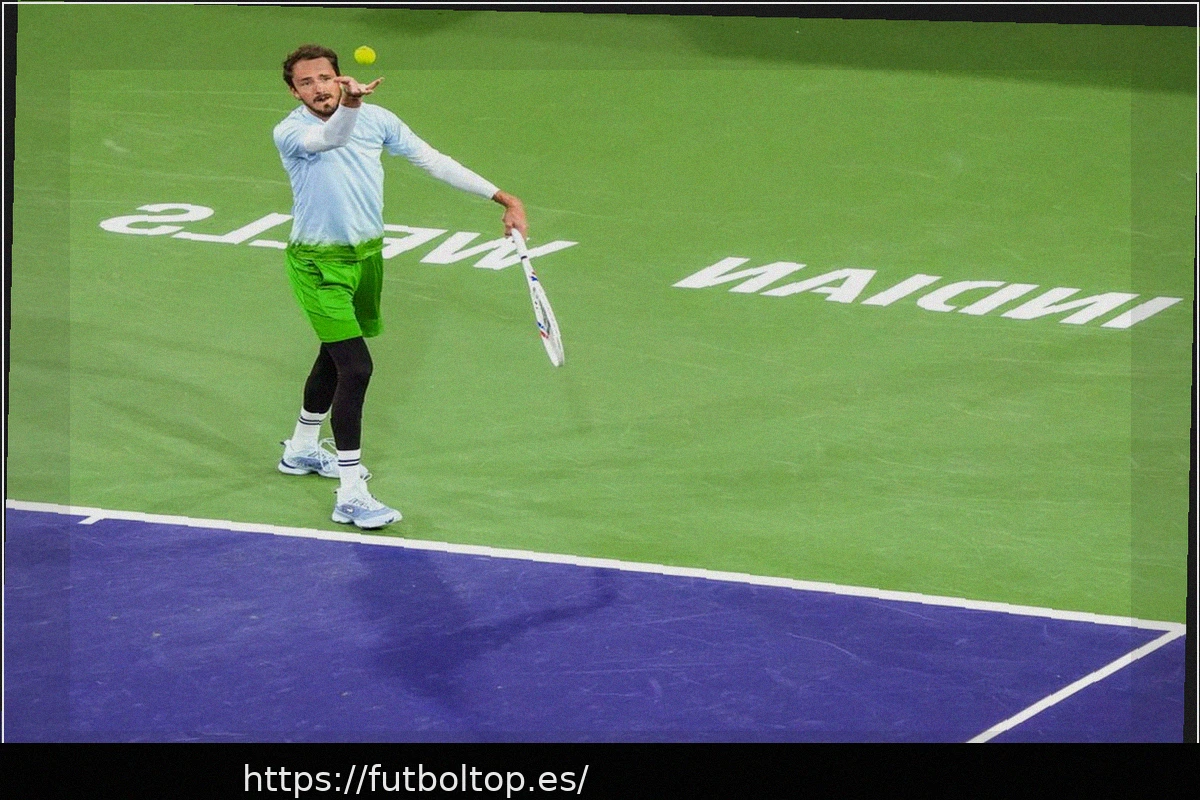
La escena merece una descripción adecuada, ya que los detalles son inmensamente importantes. Daniil Medvedev iba ganando 6-1, y el marcador estaba empatado 5-5 en el segundo set, con Jack Draper sacando 0-15. Durante el peloteo, Medvedev devolvió un golpe e inmediatamente levantó los brazos con sorpresa, convencido de que la pelota de Draper había caído fuera. Sin embargo, el punto no se detuvo. La pelota siguió moviéndose, y el intercambio continuó durante tres golpes más antes de que Medvedev finalmente golpeara la pelota en la red.
Luego vino el momento que transformó un punto perdido rutinario en una controversia que definió el torneo. En lugar de prepararse para el siguiente saque, Medvedev se dirigió a la juez de silla Aurelie Tourte y solicitó una llamada de interrupción (hindrance), argumentando que el gesto de Draper a mitad del peloteo lo había distraído. Tourte revisó las imágenes y falló a favor de Medvedev, informándole a Draper que su movimiento constituía una acción fuera de la conducta normal de un peloteo, lo suficientemente significativa como para justificar la llamada.
El público de California respondió con abierta hostilidad. Fuertes abucheos cayeron durante el cambio de lado y de nuevo cuando Medvedev selló el partido. Draper, para su inmenso crédito, mantuvo la compostura mientras desmantelaba metódicamente la lógica de la decisión.
Le señaló a Tourte que los jugadores levantan los brazos a mitad del peloteo con frecuencia, que la supuesta distracción no pudo haber sido particularmente grave dado que se jugaron dos golpes más después de ella, y que la llamada no guardaba relación con la realidad de lo que había sucedido en la cancha. En la red, fue cortés pero firme, felicitando a Medvedev por la victoria mientras dejaba claro que no creía que el gesto hubiera causado ninguna distracción genuina.
Medvedev, por su parte, no pretendió lo contrario. Concedió después que no se había distraído significativamente y que no se sentía particularmente bien con el resultado, pero que simplemente había utilizado la regla tal como existía y dejó la decisión al árbitro. Técnicamente no se equivocó, ya que operó dentro del sistema. El problema, entonces, es el sistema mismo.
El Problema de los Desafíos que Dependen del Resultado
Aquí reside el defecto fundamental en el corazón de la regla actual, articulado de la mejor manera por Aryna Sabalenka después de su propia victoria en semifinales ese mismo fin de semana. La número uno del mundo se centró en la absurdidad inherente del procedimiento: un jugador puede terminar un punto entero, descubrir que lo ha perdido y solo entonces solicitar una revisión por interrupción. Sabalenka argumentó que si la distracción fuera realmente incapacitante, el jugador afectado se detendría inmediatamente y lo diría. No continuaría peloteando durante varios golpes más.
El hecho de que un jugador espere a ver el resultado antes de decidir si fue molestado dice todo lo que hay que saber sobre la naturaleza de la queja. Si Medvedev hubiera ganado el punto, no se habría solicitado ninguna revisión. La distracción, aparentemente, no habría valido la pena mencionarla.
Esa observación es la granada lanzada contra todo el edificio de la regla. Hace que el sistema dependa del resultado, lo que significa que no tiene nada que ver con la distracción genuina en absoluto. Tiene que ver con la ventaja.
En el fútbol, la tecnología equivalente se llama VAR, y la comparación es tanto instructiva como condenatoria. La tecnología de Video Assistant Referee se introdujo para corregir errores claros. Lo que produjo en cambio fue una cultura de escrutinio retroactivo, de goles anulados por fuera de juego milimétricos, de decisiones revisadas mucho después de que el momento emocional hubiera pasado. No ha hecho que el fútbol sea más justo en ningún sentido significativo. Lo ha hecho más litigioso, más paranoico y considerablemente menos placentero de ver.
El ex profesional australiano John Millman capturó la creciente frustración en las redes sociales, señalando que la revisión de video ha producido demasiadas llamadas de interrupción e instando a la ATP y la WTA a intervenir antes de que el problema se metastatice aún más. No es un argumento particularmente complicado. La complejidad, resulta, es política.
Dos Manifestaciones del Mismo Defecto
La propia Sabalenka experimentó la incomodidad de la regla en el Abierto de Australia, cuando un juez de silla le pitó una interrupción a mitad del peloteo por un inusual «doble gruñido» durante un punto contra Svitolina. Según su relato, la llamada surgió de la nada y desconcertó a todos en la cancha, incluida la propia Svitolina, quien pareció visiblemente confundida por la interrupción.
Estas son dos aplicaciones diferentes de la misma herramienta defectuosa: una donde el árbitro interviene sin ser invitado por un ruido que no sorprendió a nadie, y otra donde un jugador espera a ver el resultado antes de presentar una queja sobre un gesto que no interrumpió nada. Ninguna inspira confianza. Ambas, inevitablemente, corroen la confianza.
Una Solución Clara
La solución no es la abolición de la revisión de video, que tiene una utilidad genuina en situaciones de interrupción verdaderamente flagrantes, como cuando un jugador hace algo deliberadamente diseñado para perturbar. La solución es un requisito de procedimiento simple: si crees que fuiste impedido, debes detener el juego inmediatamente y decirlo. No puedes jugar cuatro golpes más, perder el punto y luego consultar tus quejas. La regla necesita un límite temporal, un requisito de que la afirmación de distracción y la experiencia de distracción ocurran en el mismo momento, en lugar de estar separadas por la conveniente distancia de un peloteo perdido.
Draper, exhausto de vencer a Djokovic menos de 24 horas antes, perdió el break, perdió su saque y, finalmente, perdió el partido. Caerá del top 20 en el ranking de esta semana. Si la llamada de interrupción cambió definitivamente el resultado es, por supuesto, incognoscible. Medvedev fue dominante en todo momento, y el primer set había sido una paliza. Pero ese es precisamente el punto. En los momentos más tensos e importantes de los torneos más grandes del deporte, nadie debería quedarse preguntándose si el resultado fue moldeado por una regla con la que ni siquiera el hombre que se benefició de ella se siente bien.
El tenis ha pasado décadas construyendo una reputación como un deporte con un código moral inusualmente fuerte, que incluye la tradición de cantar tus propias bolas fuera, de aceptar las llamadas de línea que van en tu contra y de estrechar manos con genuina gracia. Esa cultura es invaluable y merece ser protegida.
Una regla que permite a los jugadores terminar un punto, verificar si lo perdieron y luego reclamar retroactivamente una distracción no es compatible con esa cultura. Desafortunadamente, es compatible con la estructura de incentivos del deporte de élite, que es precisamente por lo que el circuito necesita cerrar la laguna antes de que más torneos sean recordados por lo que sucedió en una sala de revisión de video en lugar de en la cancha.
La tecnología no es el enemigo. El procedimiento sí lo es. Hay que arreglar el procedimiento.
English Version (Rephrased)
For much of its history, tennis operated on a foundation of elegant, almost brutal trust. The chair umpire’s word was final. Line calls were instantaneous and imperfect. Players grimaced, muttered, and occasionally erupted, but the sport moved on. There was a pleasing fatalism to it, acknowledging human error as an acceptable price for the purity of uninterrupted competition.
Then technology arrived, as it always does, promising a cleaner world. Hawk-Eye first, eliminating the injustice of the bad line call. More recently, video review, available on all courts at the nine ATP and WTA Masters 1000 tournaments since last February, promised to do for hindrances and foul shots what electronic line-calling had done for the baseline. While the idea was sound, its execution is increasingly becoming a slow-motion disaster.
The incident at Indian Wells on Friday serves as the clearest illustration yet of a system being stretched to cover something it was never meant to protect: the retroactive grievance.
The Turning Point
The scene deserves a proper setting, as the details are immensely important. Daniil Medvedev was leading 6-1, with the second set tied at 5-5, and Jack Draper serving at 0-15. During the rally, Medvedev returned a shot and immediately raised his arms in surprise, convinced Draper’s ball had landed out. However, the point did not stop. The ball kept moving, and the exchange continued for three more shots before Medvedev eventually hit the ball into the net.
Then came the moment that transformed a routine lost point into a tournament-defining controversy. Instead of preparing for the next serve, Medvedev turned to chair umpire Aurelie Tourte and requested a hindrance call, arguing that Draper’s mid-rally gesture had distracted him. Tourte reviewed the footage and ruled in Medvedev’s favour, informing Draper that his movement constituted an action outside the normal conduct of a rally, significant enough to warrant the call.
The California crowd responded with open hostility. Loud boos rained down at the changeover and again when Medvedev sealed the match. Draper, to his immense credit, maintained his composure while methodically dismantling the decision’s logic.
He pointed out to Tourte that players raise their arms mid-rally all the time, that the supposed distraction could not have been particularly severe given that two more shots were played after it, and that the call bore no relationship to the reality of what had occurred on court. At the net, he was gracious but firm, congratulating Medvedev on the victory while making it clear he did not believe the gesture had caused any genuine distraction.
Medvedev, for his part, did not pretend otherwise. He conceded afterward that he had not been significantly distracted, and that he did not feel particularly good about the outcome, but merely that he had used the rule as it existed and left the decision to the umpire. He wasn’t technically wrong, as he operated within the system. The system itself is the problem.
The Problem of Outcome-Dependent Challenges
Here lies the fundamental flaw at the heart of the current rule, articulated best by Aryna Sabalenka after her own semifinal victory that same weekend. The world number one zeroed in on the fundamental absurdity of the procedure: a player can finish an entire point, discover they have lost it, and only then request a hindrance review. Sabalenka argued that if the distraction were genuinely debilitating, the affected player would stop immediately and say so. They would not continue rallying for several more shots.
The fact that a player waits to see the outcome before deciding whether they were disturbed tells you everything you need to know about the nature of the complaint. Had Medvedev won the point, no review would have been sought. The distraction, apparently, would not have been worth mentioning.
That observation is the grenade lobbed into the entire edifice of the rule. It renders the system outcome-dependent, meaning it has nothing to do with genuine distraction at all. It has to do with leverage.
In football, the equivalent technology is called VAR, and the comparison is both instructive and damning. Video Assistant Referee technology was introduced to correct clear errors. What it produced instead was a culture of retroactive scrutiny, of goals disallowed for millimetric offsides, of decisions reviewed long after the emotional moment had passed. It has not made football fairer in any meaningful sense. It has made it more litigious, more paranoid, and considerably less pleasurable to watch.
Former Australian professional John Millman captured the growing frustration on social media, noting that video review has produced far too many hindrance calls and urging the ATP and WTA to intervene before the problem metastasizes further. It is not a particularly complicated argument. The complexity, it turns out, is political.
Two Manifestations of the Same Flaw
Sabalenka herself experienced the rule’s awkwardness at the Australian Open, when a chair umpire called hindrance against her mid-rally for an unusual double-grunt during a point against Svitolina. By her account, the call came from nowhere and puzzled everyone on court, including Svitolina herself, who appeared visibly confused by the interruption.
These are two different applications of the same malfunctioning tool: one where the umpire steps in uninvited over a noise that surprised no one, and another where a player waits to see the result before lodging a complaint about a gesture that disrupted nothing. Neither inspires confidence. Both inevitably corrode trust.
A Clear Solution
The solution is not the abolition of video review, which has genuine utility in truly flagrant hindrance situations, such as when a player does something deliberately designed to disrupt. The solution is a simple procedural requirement: if you believe you were hindered, you must stop play immediately and say so. You do not play four more shots, lose the point, and then consult your grievances. The rule needs a temporal boundary, a requirement that the claim of distraction and the experience of distraction occur in the same moment rather than being separated by the convenient distance of a lost rally.
Draper, exhausted from beating Djokovic less than 24 hours earlier, lost the break, lost his serve, and ultimately lost the match. He will drop out of the top 20 in this week’s rankings. Whether the hindrance call definitively changed the outcome is, of course, unknowable. Medvedev was dominant throughout, and the first set had been a rout. But that is precisely the point. In the tightest, most important moments of the biggest tournaments in the sport, no one should be left wondering whether the result was shaped by a rule that even the man who benefited from it does not feel good about.
Tennis has spent decades building a reputation as a sport with an unusually strong moral code, which includes the tradition of calling your own shots out, of accepting line calls that go against you, and of shaking hands with genuine grace. That culture is invaluable and deserves protection.
A rule that allows players to finish a point, check whether they lost it, and then retrospectively claim distraction is not compatible with that culture. Unfortunately, it is compatible with the incentive structure of elite sport, which is precisely why the tour needs to close the loophole before more tournaments are remembered for what happened in a video review room rather than on the court.
The technology is not the enemy. The procedure is. Fix the procedure.