

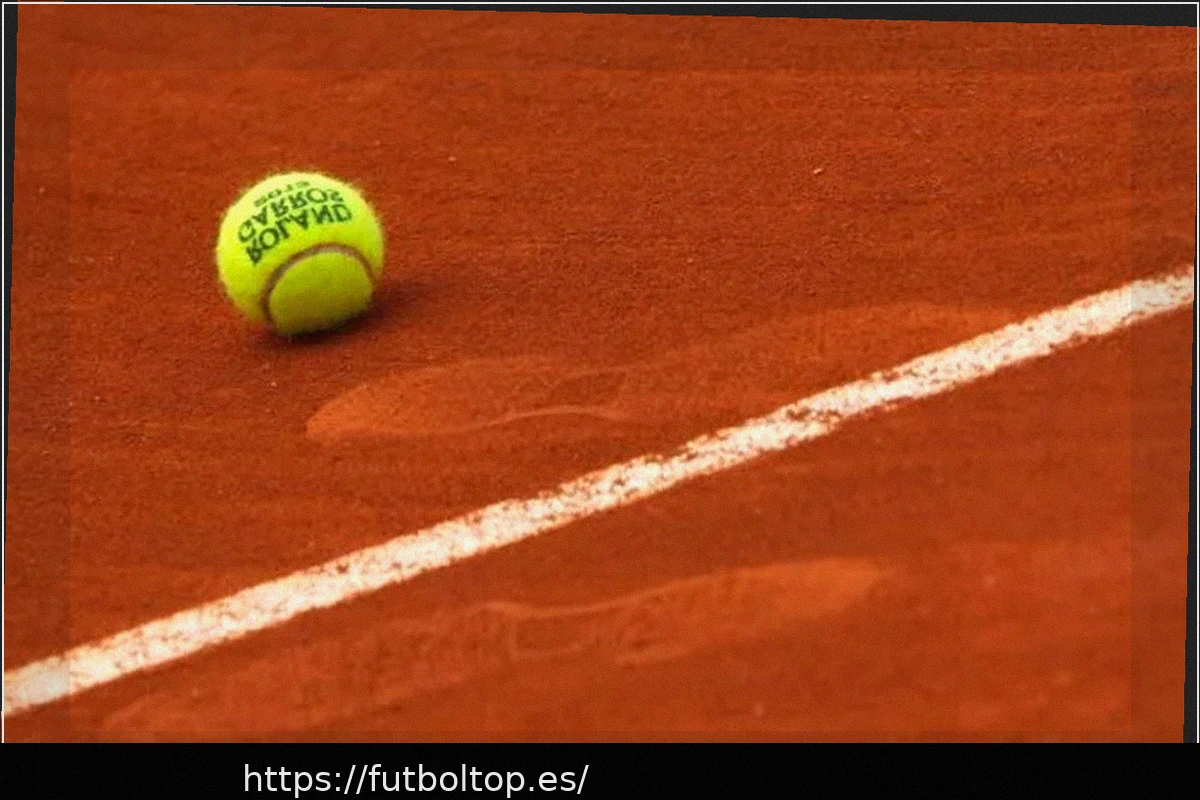
The genuine answer, as with most tennis discussions, is nuanced: it truly depends. It hinges on the individual you consult, the timing of your inquiry, and whether their favored player excels on the surface. Clay tennis isn’t inherently dull, nor is it universally thrilling. It possesses unique attributes that foster a distinct style of play, a style that either resonates with you or doesn’t. As the Monte Carlo Masters signals the start of the clay season, it seems appropriate to thoughtfully explore both perspectives, treating the subject with a degree of seriousness before arriving at the inevitable conclusion.
Is Clay-Court Tennis Boring?
Yes, It’s a Bit of a Slog
Critics aren’t entirely mistaken. Clay-court tennis can indeed be slow. The surface diminishes ball speed, rewards defensive play, and transforms what might be a quick four-shot rally on a hard court into a grueling fifteen-shot battle of endurance, often ending with a net cord. Points, games, and sets tend to be more protracted. A first-round match at Roland Garros might easily exceed four hours, even without significant errors from either player. For those introduced to tennis through the dynamic serve-and-volley era or who simply enjoy rapid ball movement, clay can demand considerable patience from a spectator.
There’s also the issue of predictability. Historically, the surface has seen its major titles concentrated among a small group of specialized players. For over two decades, Rafael Nadal’s victories on clay felt less like sporting outcomes and more like an immutable law of physics. Eleven Monte Carlo championships. Fourteen French Open titles. At a certain point, such absolute dominance ceases to generate suspense. Even now, with Nadal’s retirement and a theoretically more open field, similar player archetypes often reach the latter stages of clay tournaments, while players with powerful serves and flatter strokes tend to exit earlier. For a neutral observer, witnessing the same style of player consistently win the same tournaments each April and May can feel repetitive in a way other surfaces don’t.
The rigorous physical demands also create a kind of unpredictability that can frustrate fans seeking continuity. Clay is taxing on the body, and the spring clay swing is extensive. Player retirements, withdrawals, and the cumulative effects of fatigue from the hard-court season mean that tournament draws are seldom as robust as initially advertised. Someone invariably drops out mid-tournament, interrupting the bracket’s drama with a physio’s tape job and a press conference apology.
No, You’re Just Not Paying Attention
However, those extended rallies tell a compelling story. The sheer physical prowess and tactical acumen required to construct and win a thirty-shot exchange on clay are unparalleled in professional sports. Players are constantly deciphering spin, adjusting their footwork, repositioning across the entire baseline, masking their intentions, and making split-second strategic calculations. When Alcaraz decisively beat Lorenzo Musetti 6-1, 6-0 in the second and third sets of last year’s Monte Carlo final after losing the first, that remarkable comeback was only comprehensible because of the point-by-point narrative structure inherent in clay-court tennis. The longer the point, the richer the narrative it conveys.
Clay also uniquely rewards variety in a way hard courts often do not. Topspin, slice, drop shots, the kick serve directed to the backhand, the inside-out forehand – the surface penalizes one-dimensional players and champions those who have cultivated a comprehensive skill set. It distinguishes the tireless grinders from the artistic tacticians, and at its finest, it produces tennis that is genuinely strategic, akin to a game of chess. Watching Carlos Alcaraz on clay, or Jannik Sinner skillfully adapting his game to the conditions, or Stefanos Tsitsipas in full command at Monte Carlo, where he has consistently reached the decisive stages for years, is to witness tennis intelligence brought to life.
And despite all the complaints about its predictability, clay has also delivered some of the most emotionally resonant upsets and captivating storylines in the sport’s history. The surface can give, and it can take away. The same high bounce that favors a baseliner can betray them on an off afternoon. Fabio Fognini claimed the Monte Carlo title at 31. Novak Djokovic, one of the sport’s greatest players, was surprisingly eliminated in the second round there last year. The clay season, at its best, doesn’t just crown champions; it truly reveals character.
The Verdict: It Depends, and That’s Fine
So, we arrive back at our starting point. Clay-court tennis isn’t for everyone, and it doesn’t need to be. The surface places demands on its spectators that Wimbledon’s grass and the hard courts of Melbourne and New York do not, and there’s no discredit in finding those demands unreasonable. However, dismissing it entirely means overlooking a significant part of the tennis calendar that regularly showcases some of the most tactically intricate and physically demanding tennis of any season. Monte Carlo inaugurates the clay season in one of the most picturesque settings in sports, and whether you’re an enthusiast or a skeptic, the discussion about whether it merits your attention is, at the very least, a worthwhile one.
¿Es Aburrido el Tenis en Tierra Batida? (Español – Parafraseado)
La respuesta honesta, como ocurre con casi todas las discusiones en el tenis, es matizada: realmente depende. Depende de a quién le preguntes, cuándo le preguntes y si el jugador al que apoyas es bueno en ella. El tenis en tierra batida no es objetivamente aburrido. Ni tampoco es objetivamente emocionante. Es una superficie con características distintas que producen un estilo de tenis distinto, y ese estilo o te cautiva o no. A medida que el Masters de Montecarlo regresa para inaugurar la temporada de tierra batida, parece el momento adecuado para explorar a fondo ambos lados del argumento, tomárnoslo con cierta seriedad y luego llegar a la conclusión que ya conocíamos de antemano.
¿Es Aburrido el Tenis en Tierra Batida?
Sí, es un poco pesado
Los críticos no están del todo equivocados. El tenis en tierra batida puede ser lento. La superficie reduce la velocidad de la pelota, recompensa la defensa y convierte lo que podría ser un intercambio de cuatro golpes en pista dura en una guerra de desgaste de quince golpes que termina con una dejada en la red. Los puntos son más largos, los juegos son más largos, los sets son más largos. Un partido de primera ronda en Roland Garros puede extenderse durante cuatro horas sin que nadie juegue particularmente mal. Si llegaste al tenis a través de la explosiva era de saque y volea o simplemente disfrutas viendo la pelota ir muy rápido, la tierra batida te exige mucho como espectador.
También está el problema de la predictibilidad. Históricamente, la superficie concentra sus títulos entre un grupo muy reducido de especialistas. Durante más de dos décadas, que Rafael Nadal ganara en tierra batida era menos un resultado deportivo y más una ley de la física. Once títulos en Montecarlo. Catorce Roland Garros. En cierto punto, un dominio tan total deja de generar suspense. Incluso ahora, con Nadal retirado y el campo teóricamente abierto, los mismos nombres suelen llegar lejos en los cuadros de tierra batida, mientras que los grandes sacadores y los golpeadores de bola más planos suelen retirarse temprano. Para un neutral, ver al mismo arquetipo de jugador ganar los mismos torneos cada abril y mayo puede sentirse cíclico de una manera que otras superficies no lo hacen.
Las exigencias físicas también producen una especie de caos que frustra a los aficionados a la continuidad. La tierra batida es exigente para el cuerpo, y la temporada de primavera en tierra es larga. Retiros, abandonos y los efectos persistentes de la fatiga acumulada en los jugadores que vienen de la temporada de pista dura significan que los cuadros rara vez están tan completos como se anuncian. Alguien siempre se retira a mitad de torneo. El drama del cuadro se interrumpe con un vendaje de fisioterapeuta y una disculpa en rueda de prensa.
No, simplemente no estás prestando atención
Sin embargo, esos rallies largos. Son extraordinarios. La inteligencia física y táctica requerida para construir y ganar un intercambio de treinta golpes en tierra batida es algo inigualable en el deporte profesional. Los jugadores están leyendo los efectos, ajustando el juego de pies, reposicionándose a lo largo de toda la línea de fondo, disimulando intenciones y haciendo cálculos en fracciones de segundo simultáneamente. Cuando Alcaraz desmanteló a Lorenzo Musetti 6-1, 6-0 en el segundo y tercer set de la final de Montecarlo del año pasado después de perder el primero, esa remontada solo fue legible debido a la estructura rally por rally que exige la tierra batida. Cuanto más largo el punto, más historia cuenta.
La tierra batida también recompensa la variedad de una manera que las pistas duras no lo hacen. Topspin, slice, dejadas, el saque liftado al revés, la derecha invertida. La superficie castiga a los jugadores que tienen una sola dimensión y recompensa a aquellos que han construido un juego completo. Separa a los luchadores de los artistas y, en su mejor momento, produce un tenis genuinamente parecido al ajedrez en su construcción. Ver a Carlos Alcaraz en tierra batida, o a Jannik Sinner ajustando su juego a las condiciones, o a Stefanos Tsitsipas en pleno apogeo en Montecarlo, donde prácticamente ha sido residente en las fases decisivas de los cuadros durante años, es observar la inteligencia tenística personificada.
Y a pesar de todas las quejas sobre la predictibilidad, la tierra batida también ha producido algunas de las sorpresas y tramas más emotivas que ha visto el deporte. La superficie da y la superficie quita. El mismo bote alto que protege a un jugador de fondo puede traicionarlo una mala tarde. Fabio Fognini ganó Montecarlo a los 31 años. Novak Djokovic, uno de los mejores jugadores de la historia, fue eliminado en la segunda ronda aquí el año pasado. La temporada de tierra batida, en su mejor momento, no solo corona campeones. Revela el carácter.
El veredicto: Depende, y eso está bien
Así que aquí estamos, de vuelta donde empezamos. El tenis en tierra batida no es para todos, y no tiene por qué serlo. La superficie exige a su público lo que la hierba de Wimbledon y las pistas duras de Melbourne y Nueva York no, y no hay vergüenza en encontrar esas exigencias irrazonables. Pero descartarla por completo es perderse un tramo del calendario que regularmente produce algunos de los tenis más intrincados tácticamente y físicamente heroicos de cualquier temporada. Montecarlo abre la temporada de tierra batida en uno de los escenarios más bellos del deporte, y seas un converso o un escéptico, el argumento sobre si merece tu atención es, como mínimo, uno que vale la pena tener.